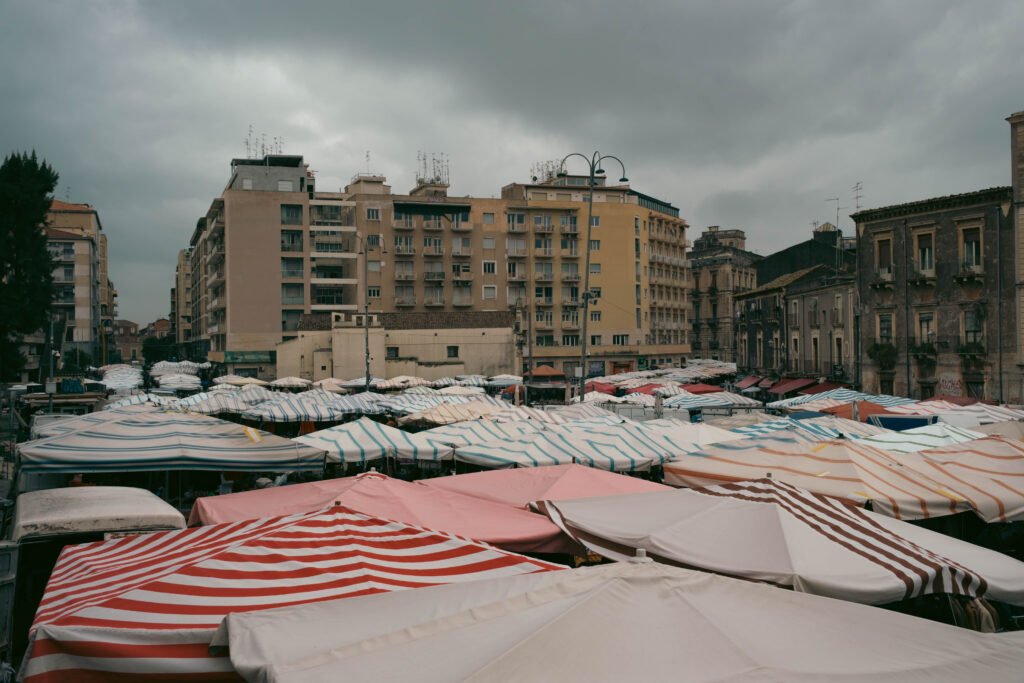
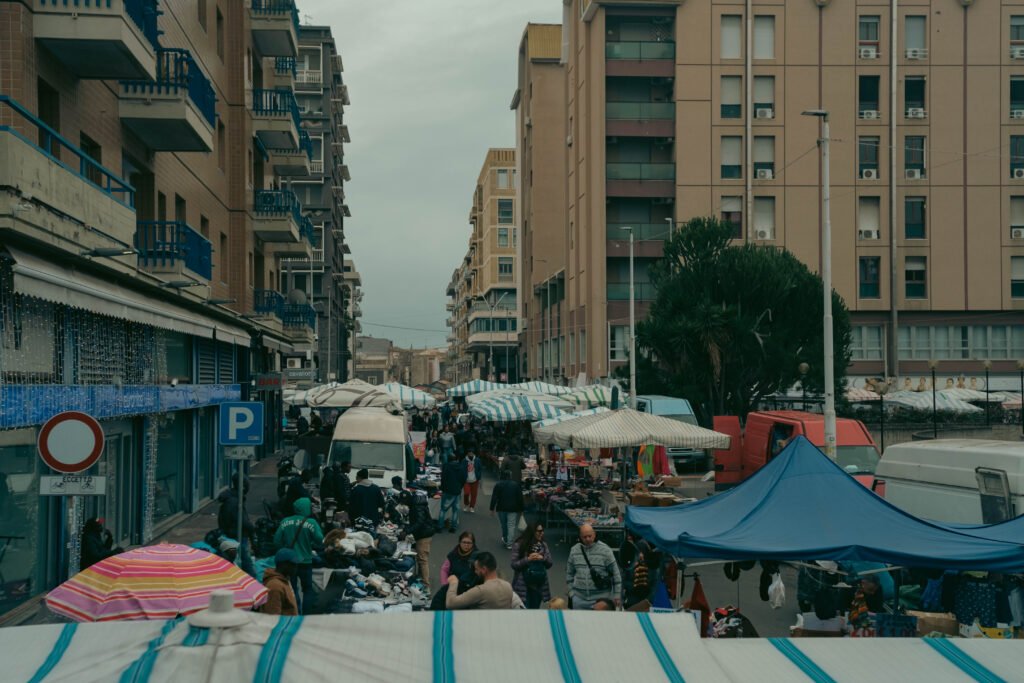
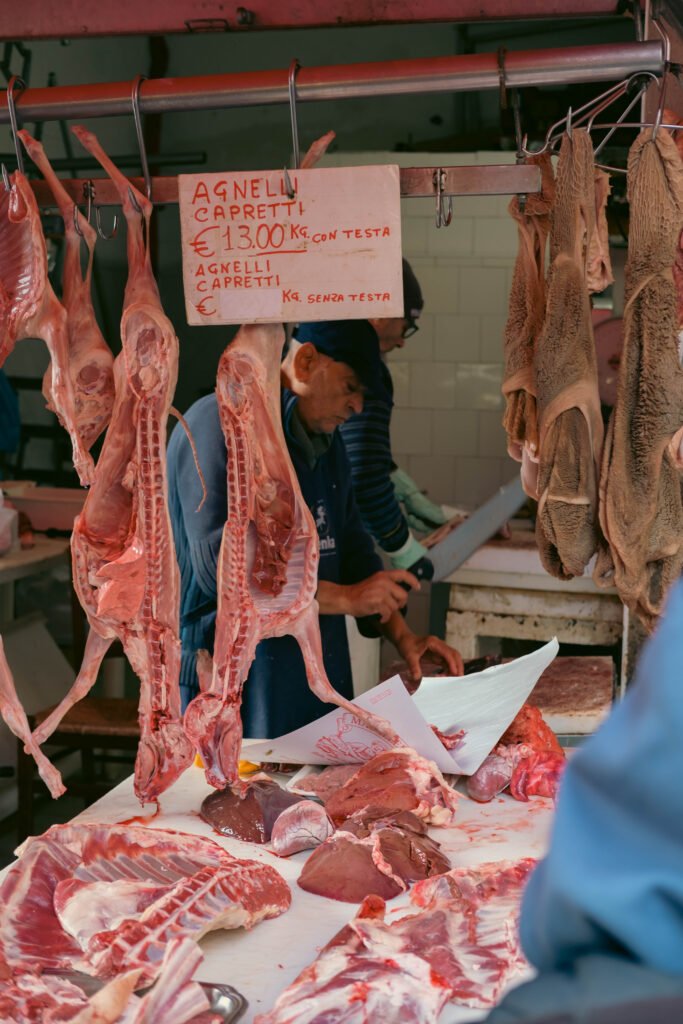
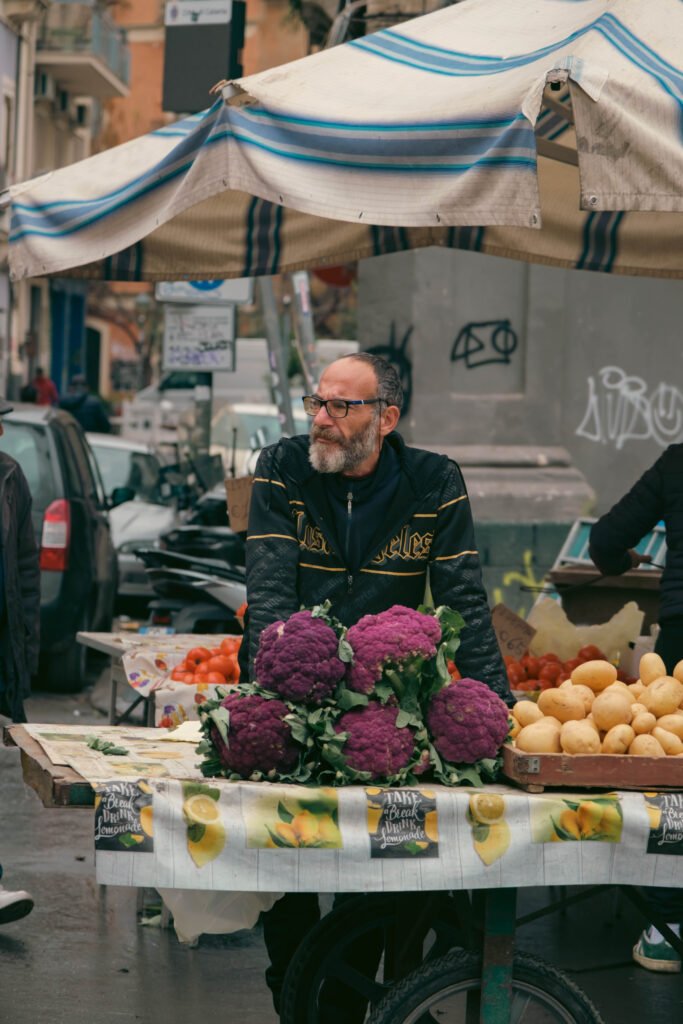
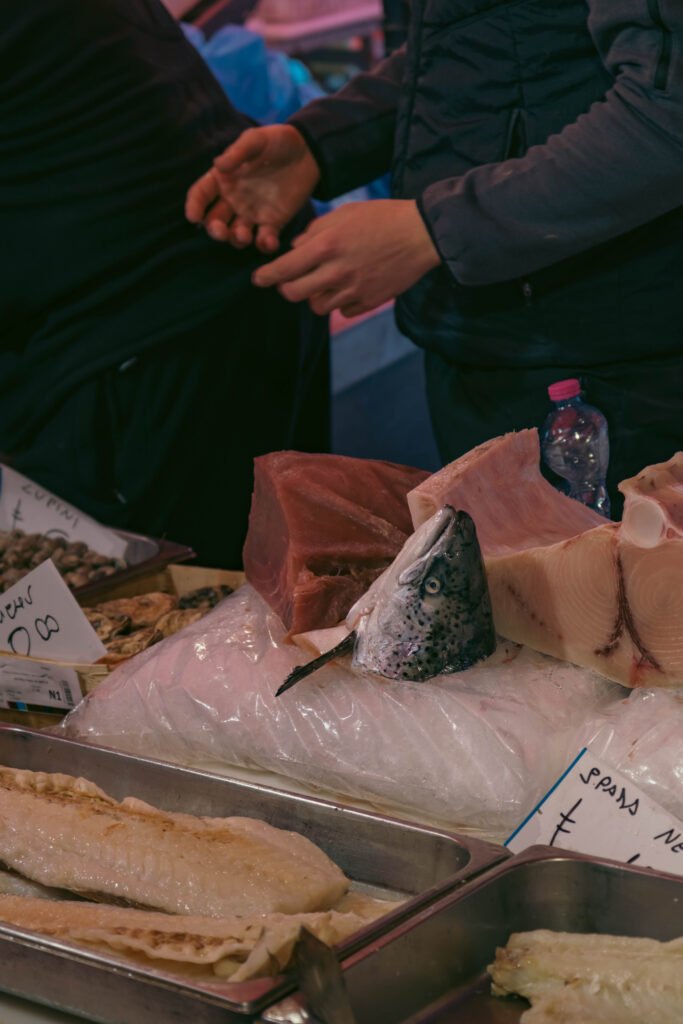
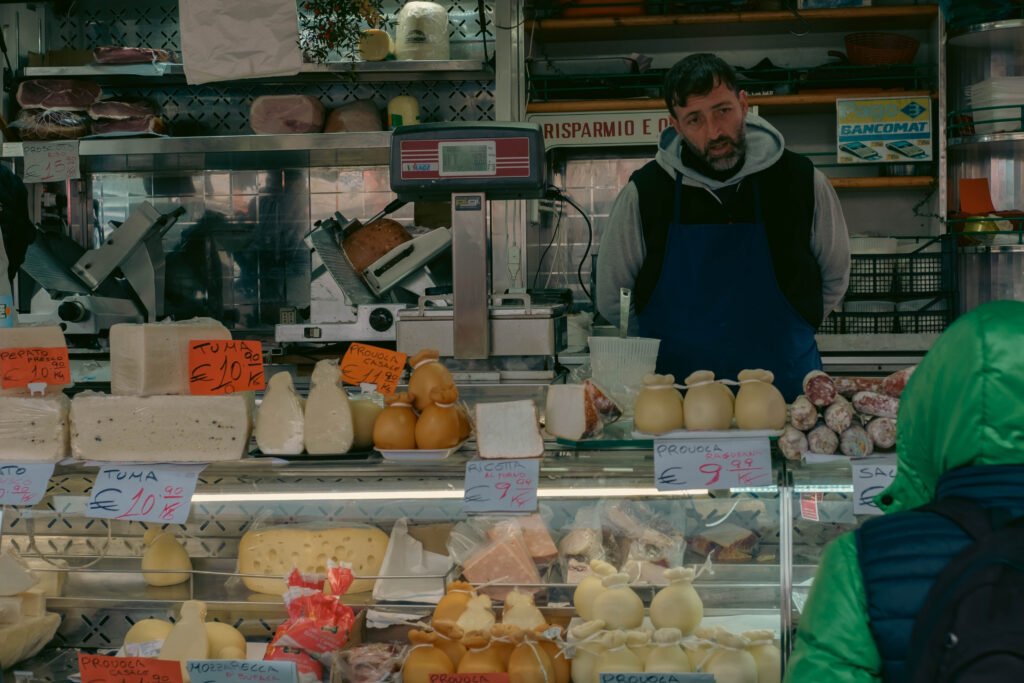
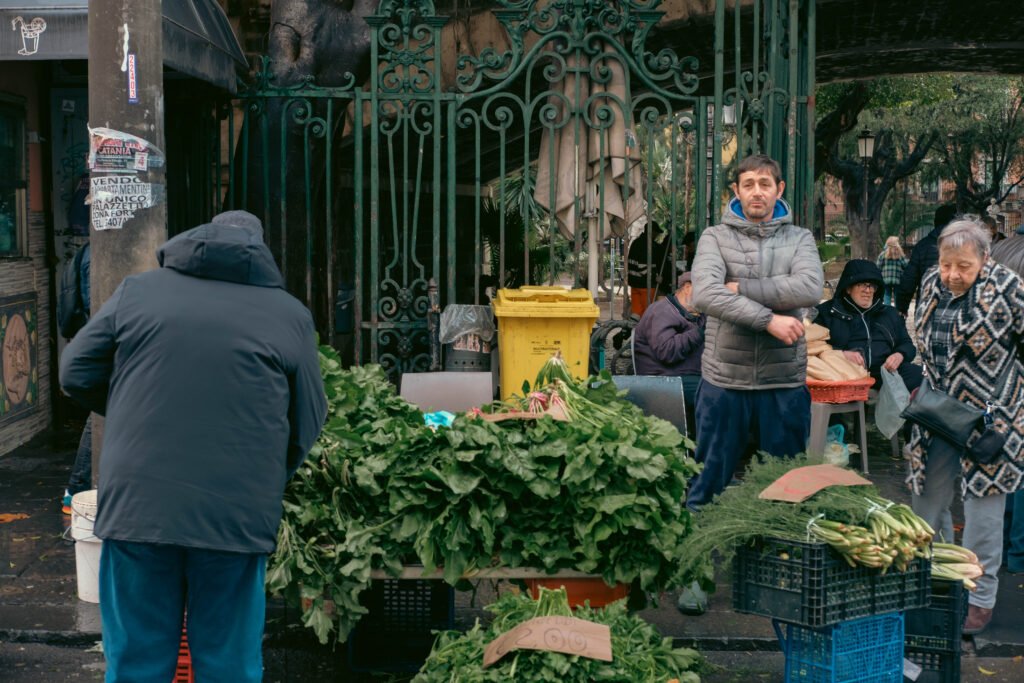
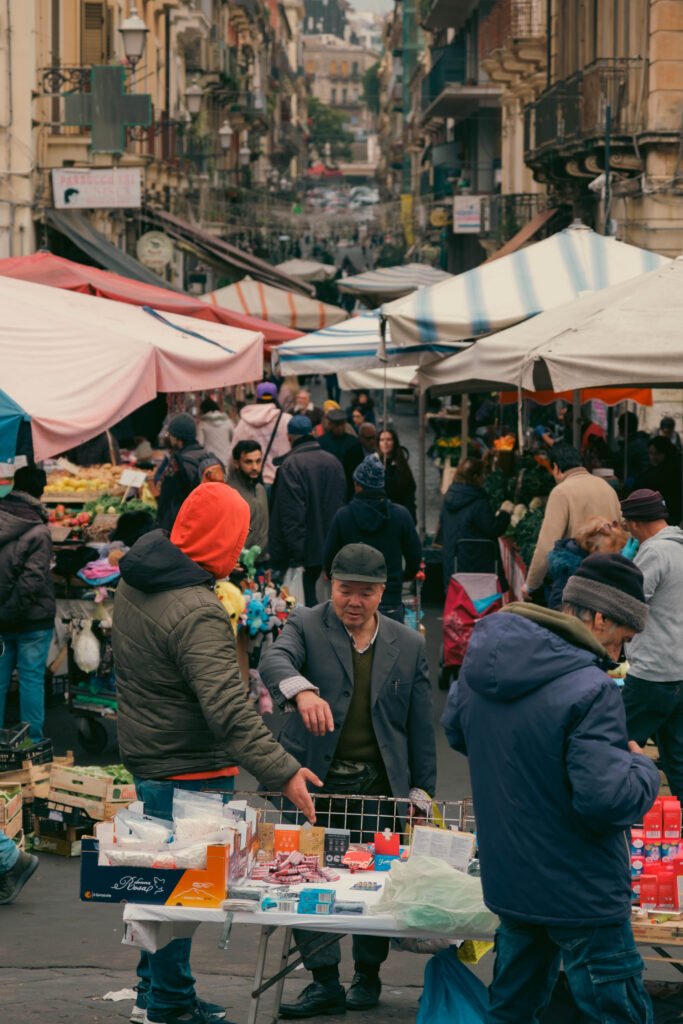
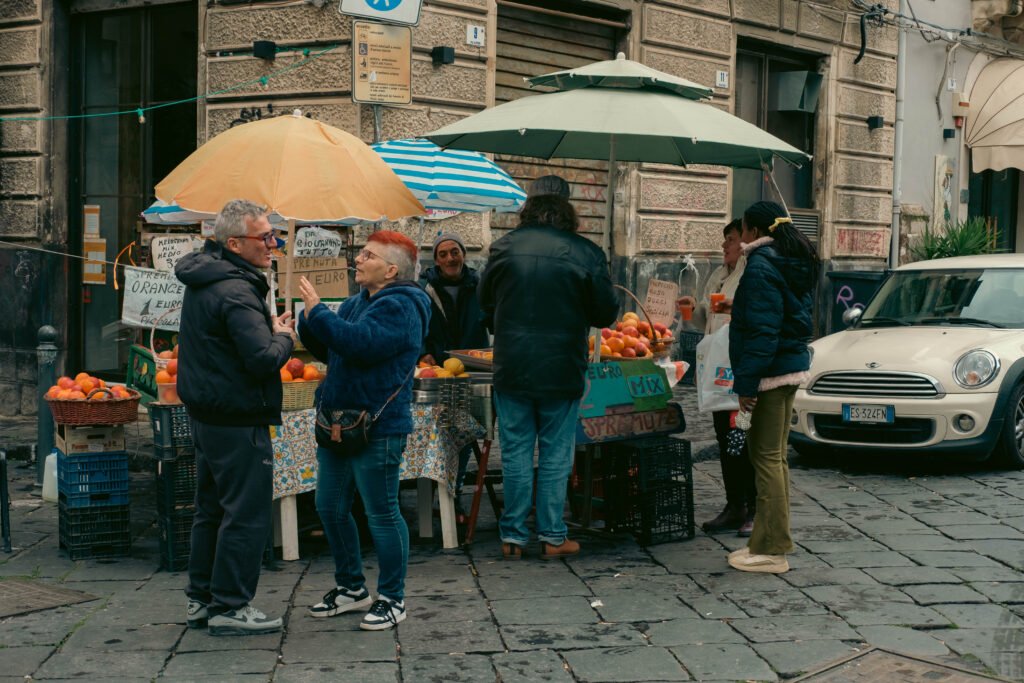
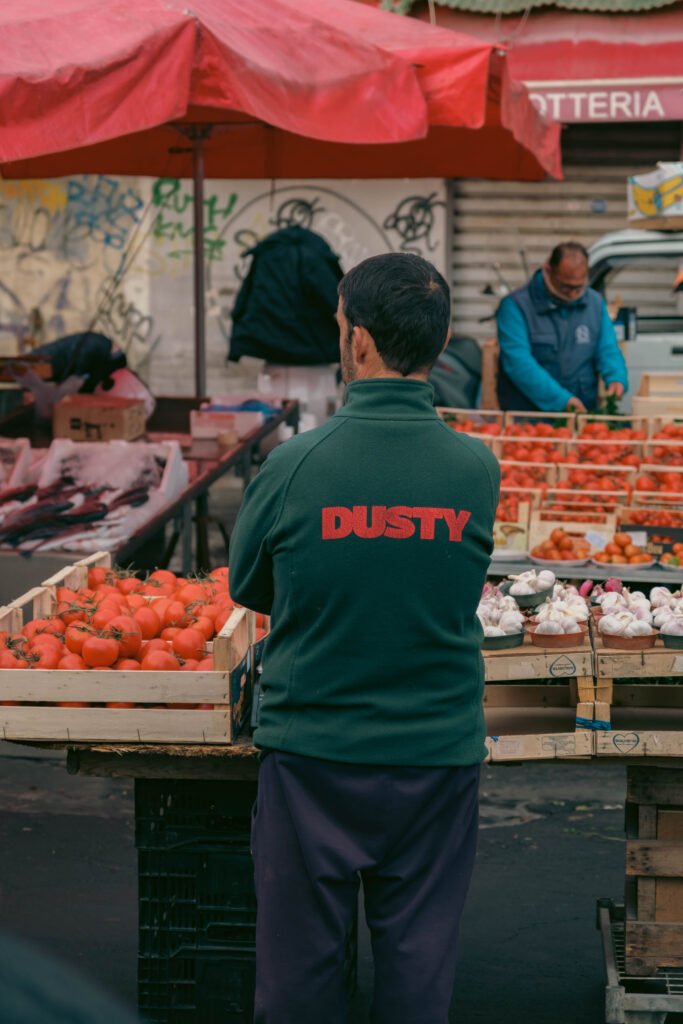
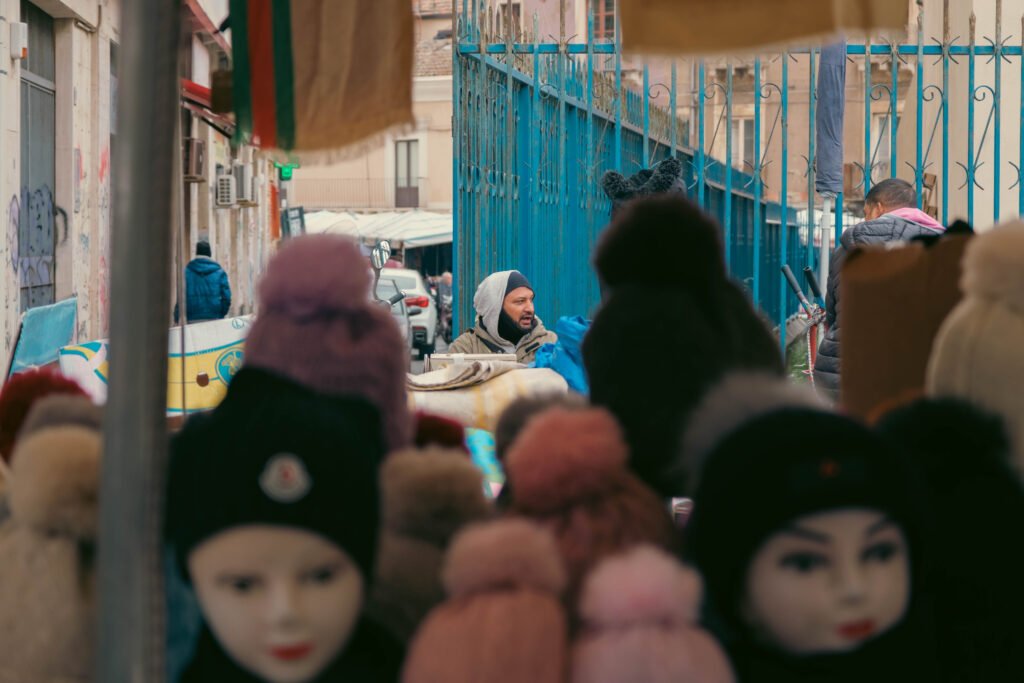
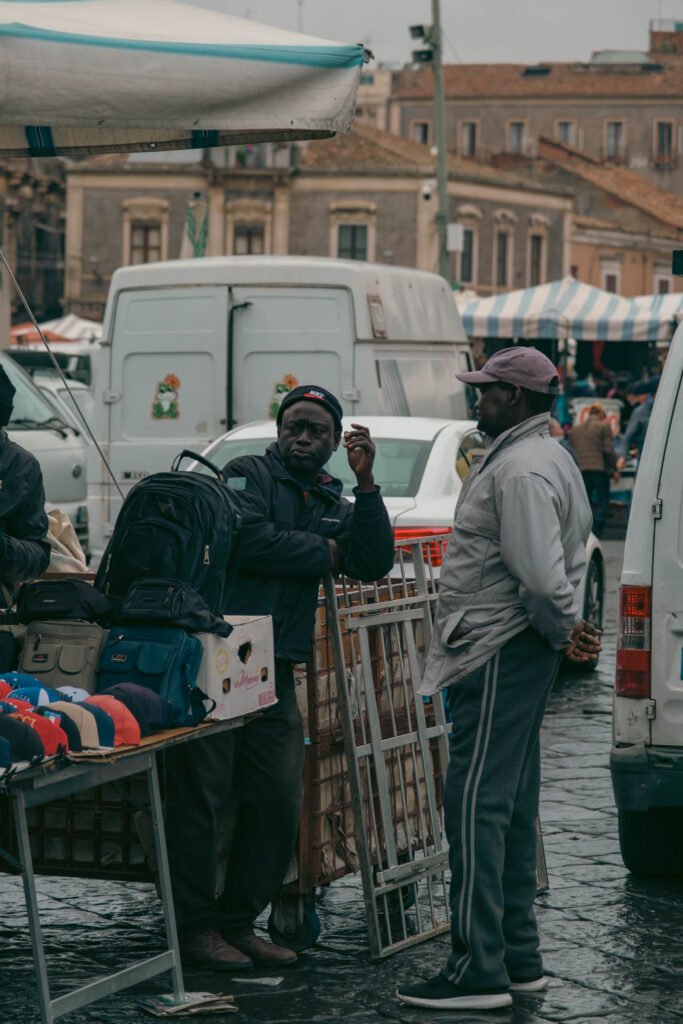
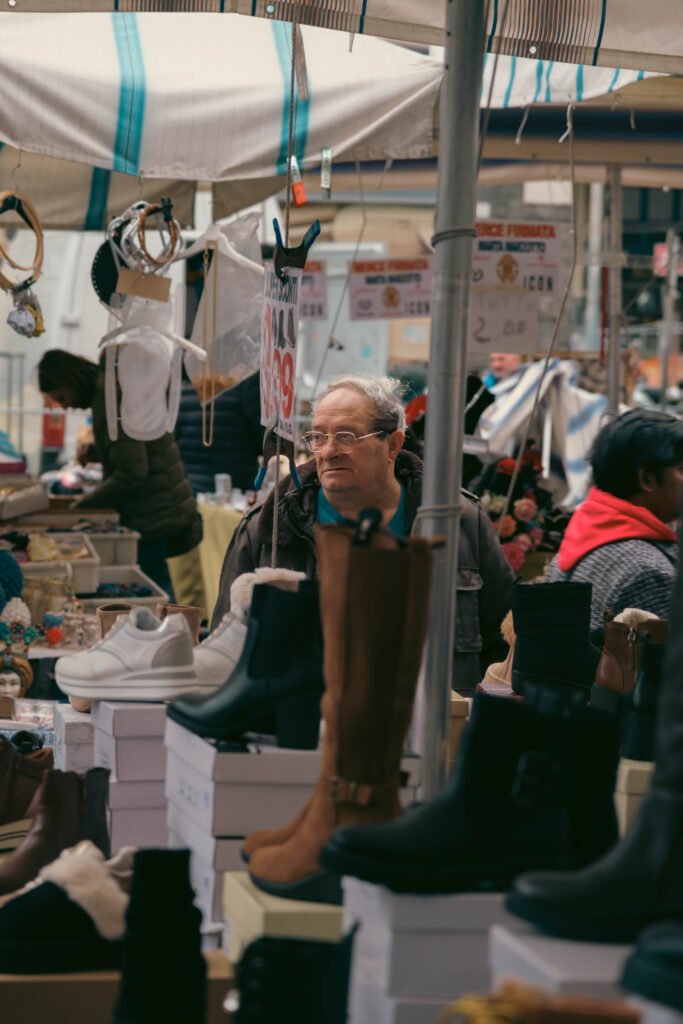
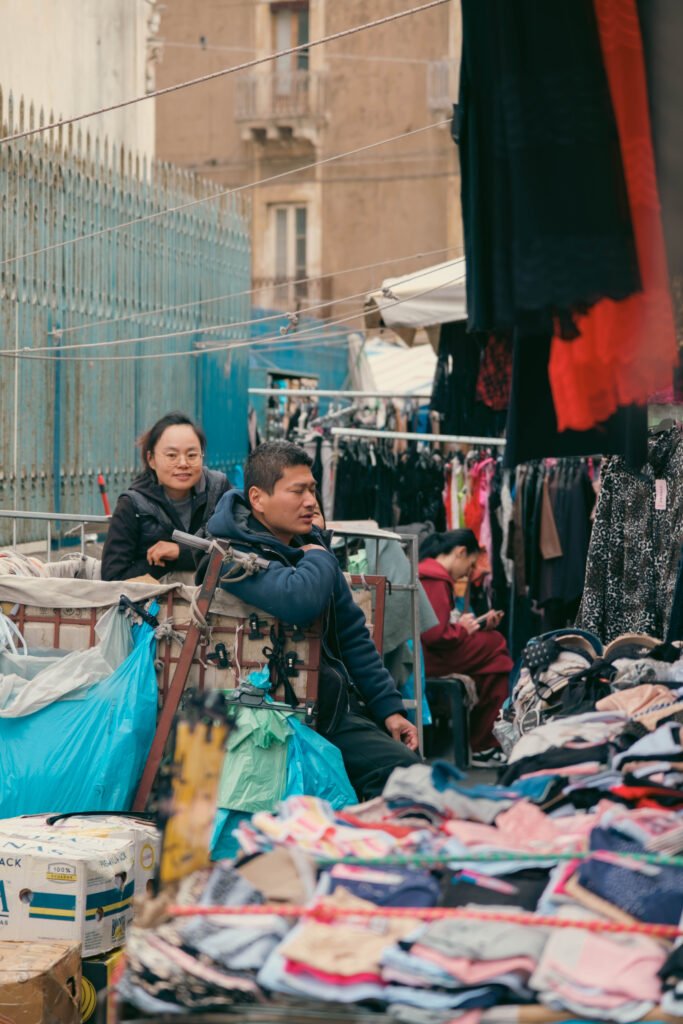
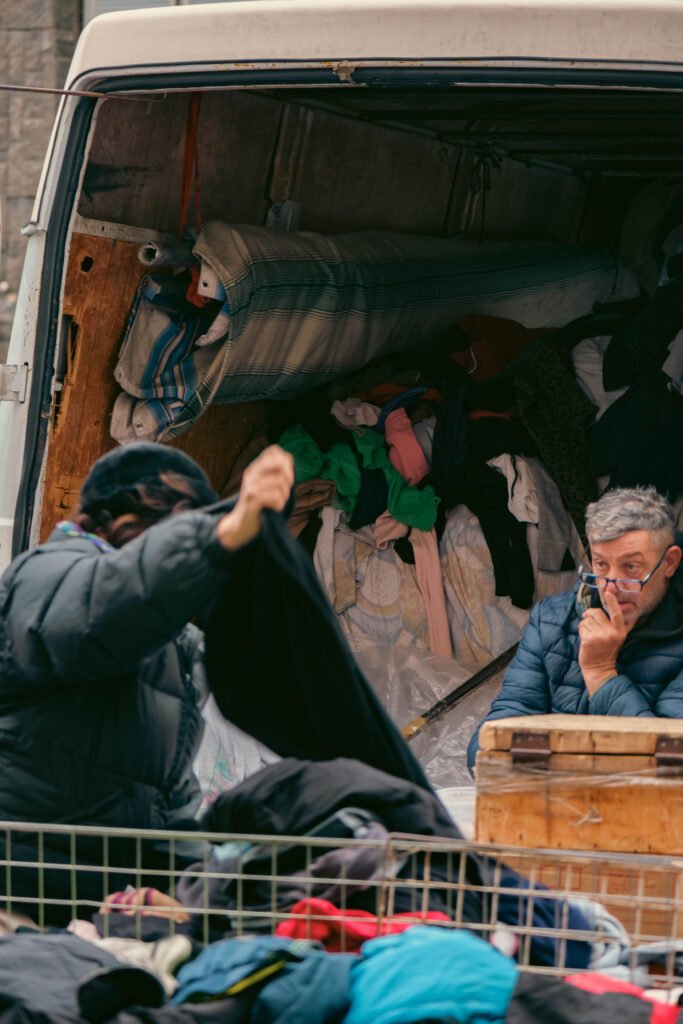
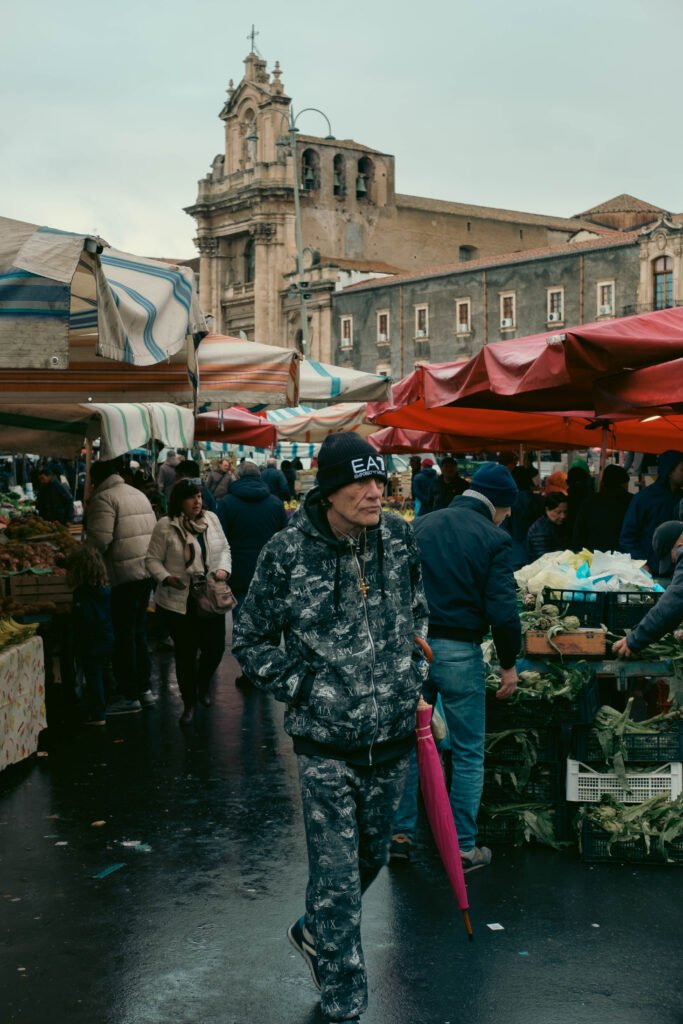
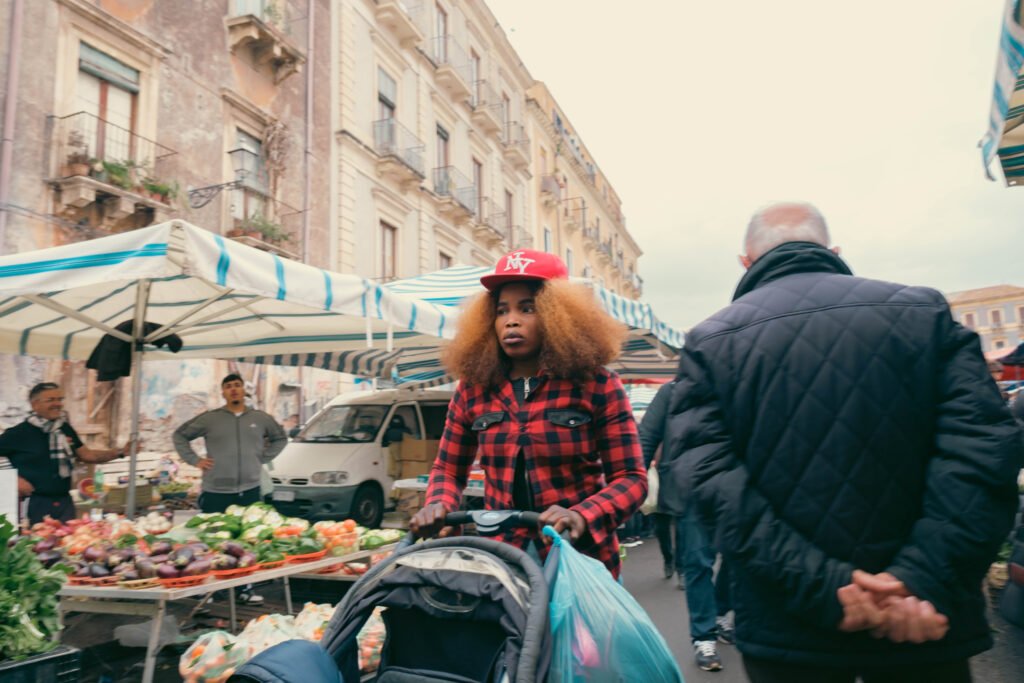
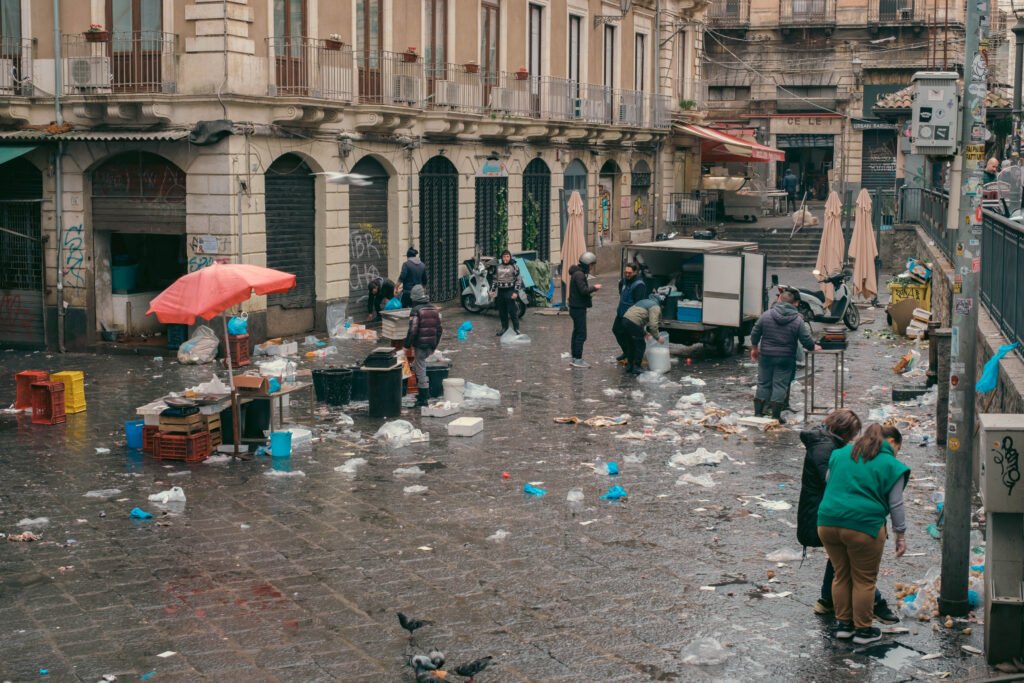
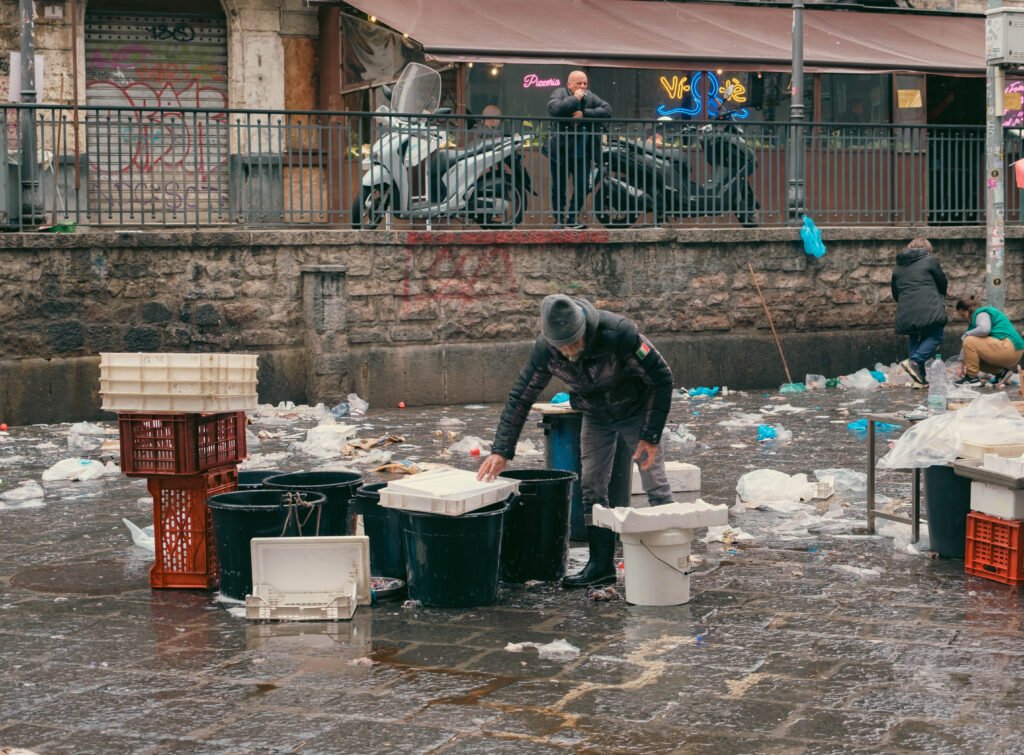
Thursday Morning. The street I saw empty last night has transformed completely. The silence is gone. The air is full of  voices, engines, and the scrape of metal carts on stone. I walk toward where I think I parked my car, but the space has vanished under a sea of stalls and tents. It feels as if the market has grown overnight, like a creature that wakes only at dawn.

The square has become a kind of open‑air hypermarket. It is stitched together by hand — crates instead of shelves, fabrics instead of ceilings, vendors instead of loudspeakers. Buildings form the walls, and balconies form the rafters. The whole place breathes.

Everything that can be sold is being sold.
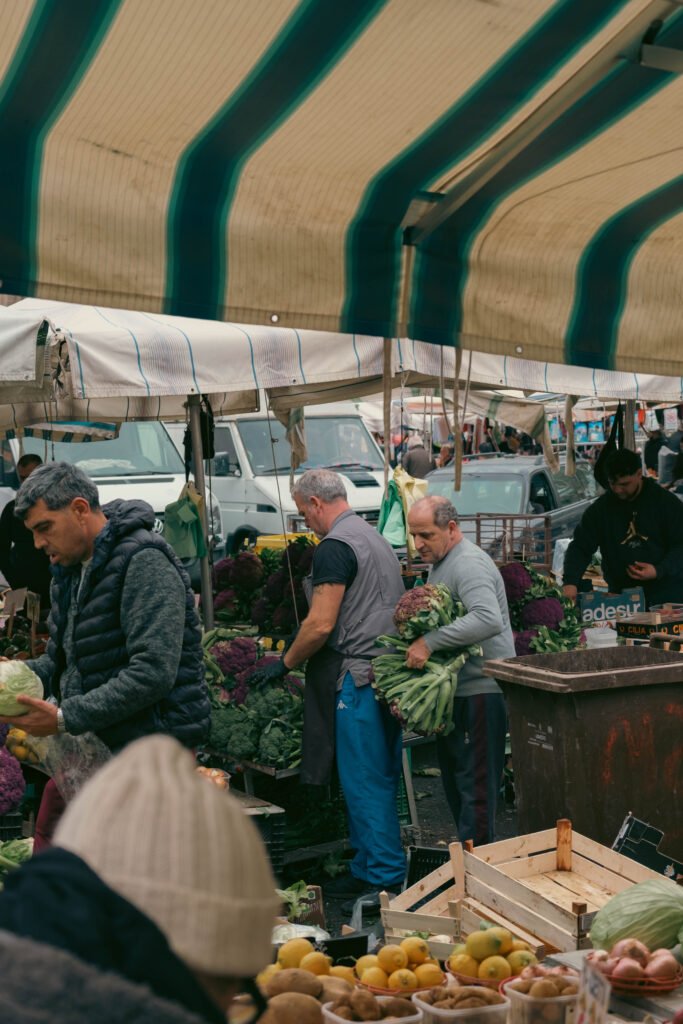
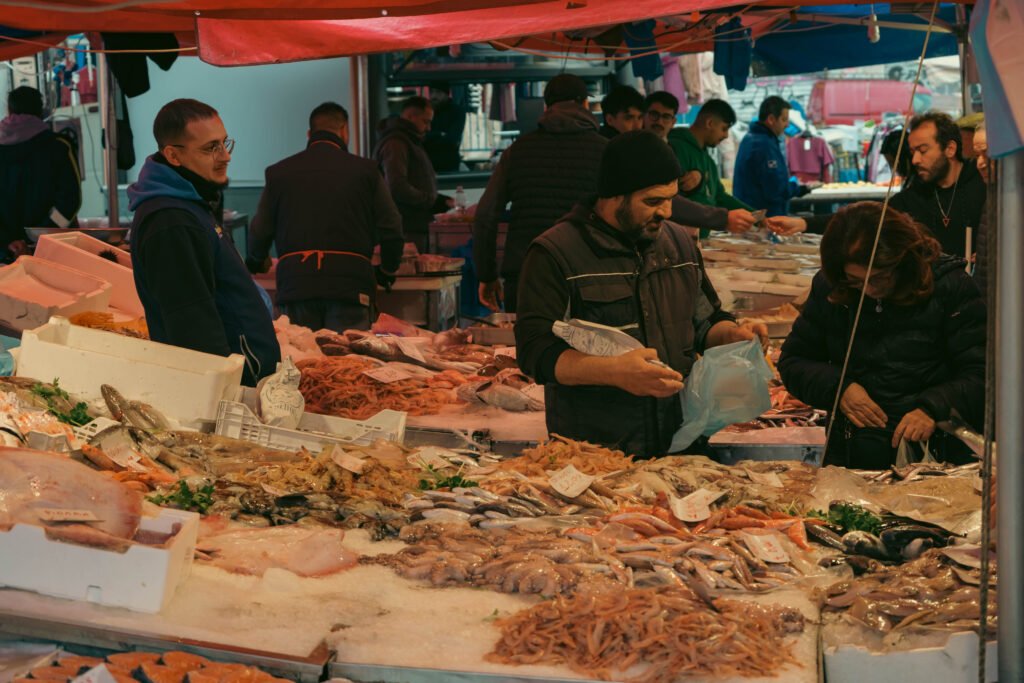
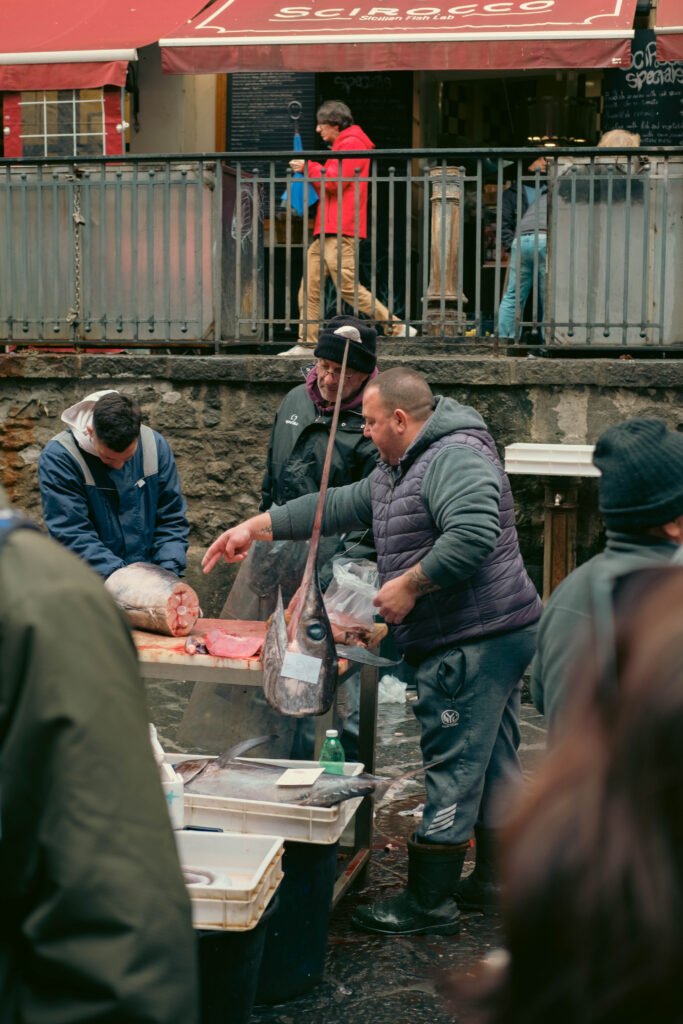
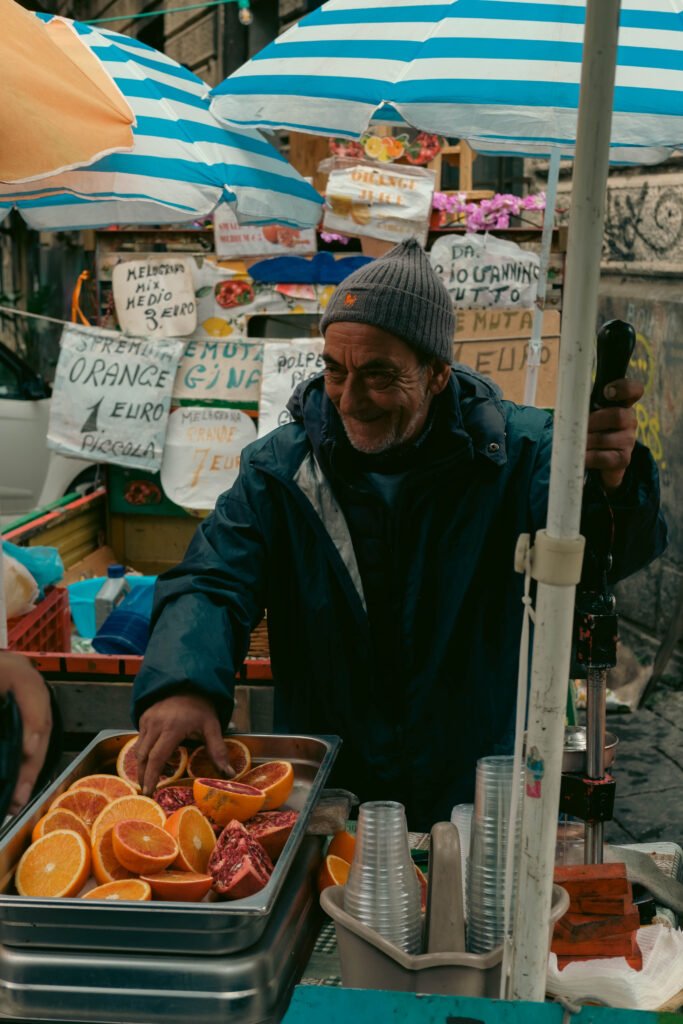
Tons of fish unknown to me.  Pyramids of fruits. Piles of socks and things I never even thought existed. A man shouting the price of strawberries as if announcing breaking news. While some customers are picking products as if its “Black Friday”.

I keep wondering where all of this comes from — the goods, the people and the energy. Do the vendors arrive before sunrise? Do they drive in from the countryside? Do they know each other, or is this a temporary city that assembles and dissolves every week?

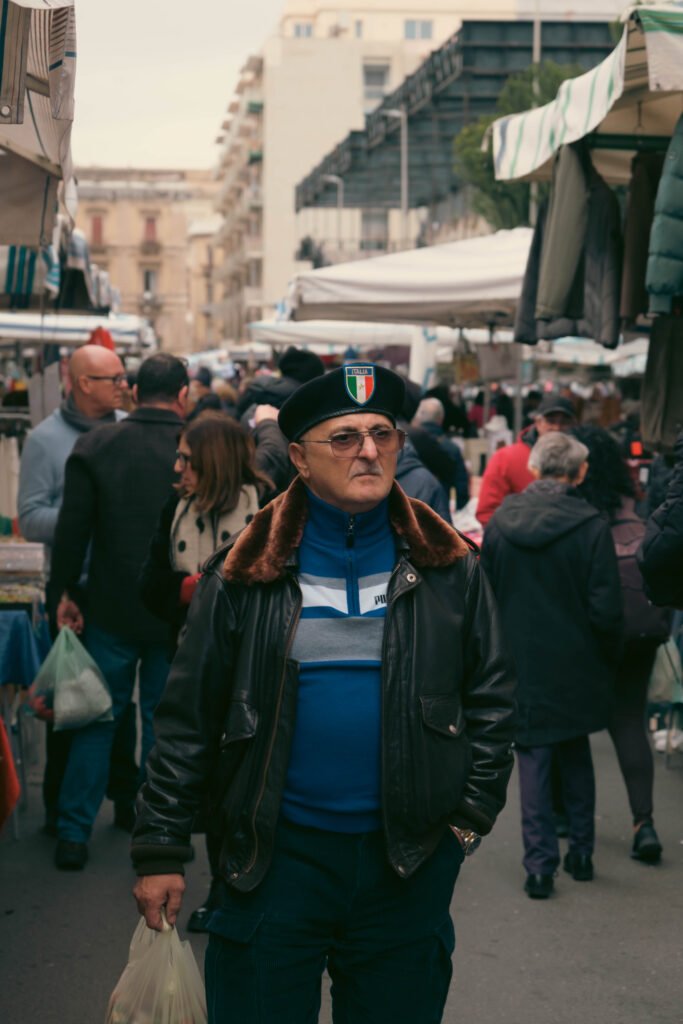
Everyone carries a story on their face. Some people look open and warm, others guarded and distant. There are those dressed with effortless style, and others who speak without words. As time moves on, the pulse of the market begins to fade. The rush thins out, and people drift away. Faces that crossed for a brief moment scatter again into the city. Will they ever meet again, or was this just a passing moment by chance?

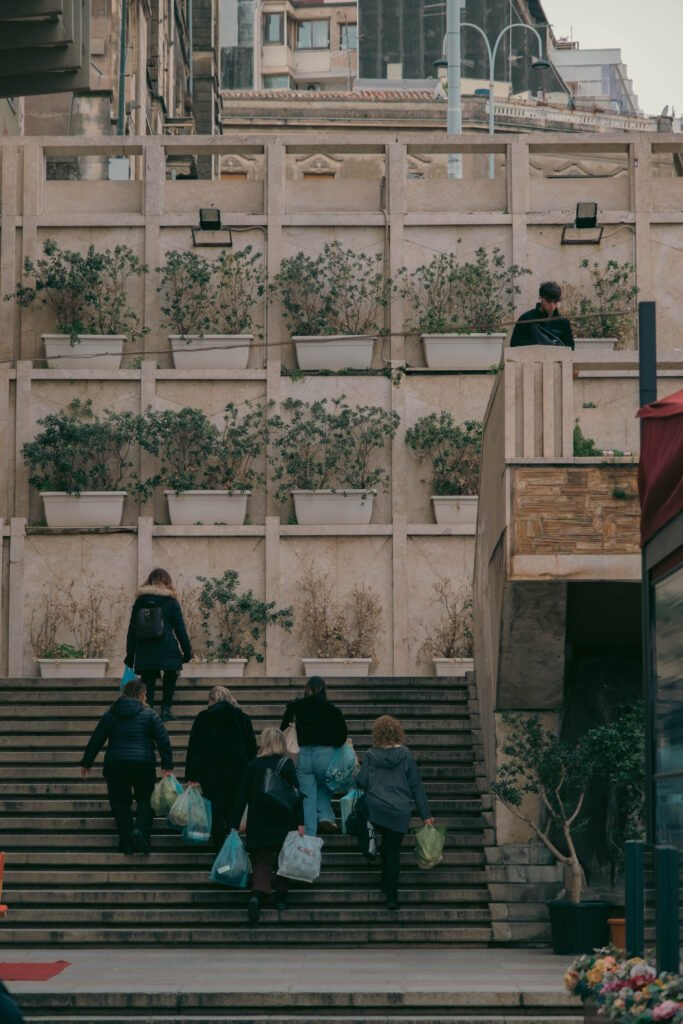
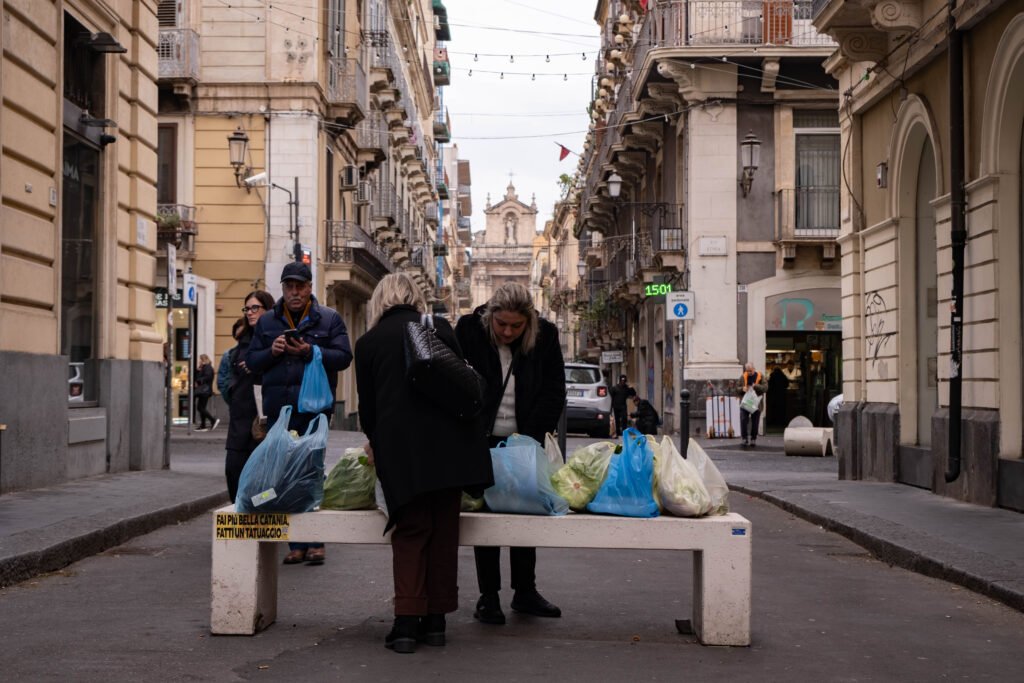
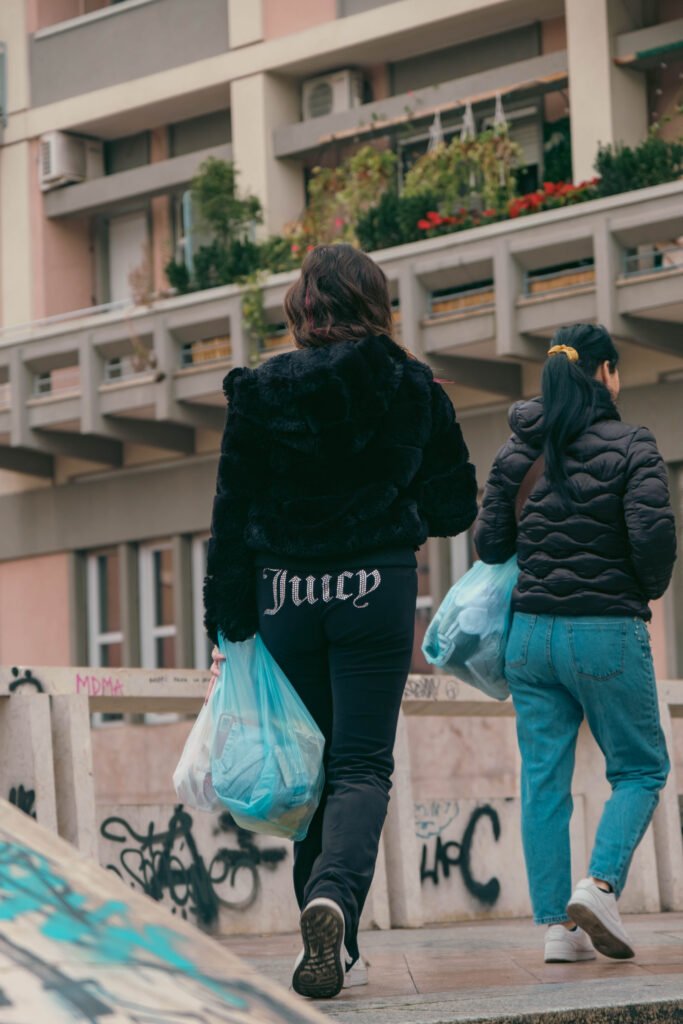
Shoppers check their bags as they walk away — some heavy with the day’s shopping, others light and empty-handed. The morning’s urgency dissolves into a quieter rhythm.

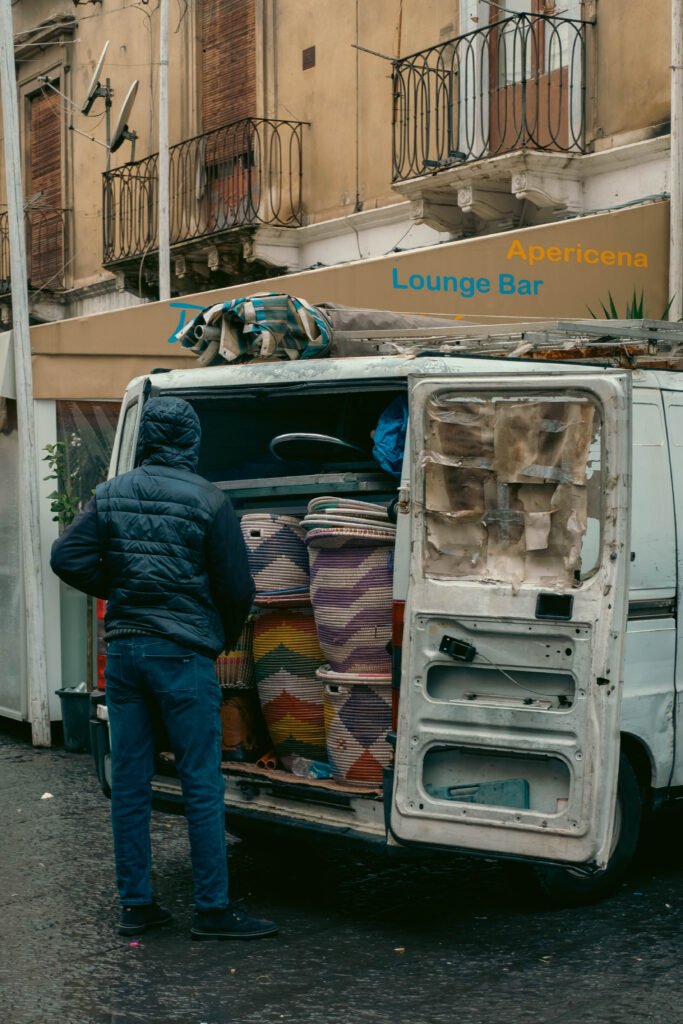
And for the vendors, a different question remains. What’s left on their tables? What gets packed back into crates? Where do these products travel next — to another market, another town, another story waiting to unfold?